Kitchen Fire Suppression Systems in Baltimore, MD
Hood suppression service, semi-annual NFPA 96 and NFPA 17A inspections, UL 300 upgrades and new system installation for restaurants and commercial kitchens across Central Maryland.
The system standing between a grease fire and a closed restaurant
A commercial kitchen fire moves fast, and it almost always starts at the cooking line. The hood suppression system above your appliances is designed to smother that fire in seconds and shut down the fuel and gas, but only if it has been serviced on schedule and upgraded to current standards. A missed semi-annual service, a corroded fusible link, or a pre-UL 300 system is exactly what closes a restaurant after a fire, and what the fire marshal and your insurer look for first.
Code One Fire Protection installs, inspects and services wet-chemical kitchen hood suppression systems for restaurants, hotels, schools, senior living and any commercial kitchen across the Baltimore metro. We keep you on the semi-annual schedule the code requires, tag every service, and coordinate with your Class K extinguishers so the whole cooking line is covered.
Whether you are opening a new kitchen in Towson, upgrading an aging system in downtown Baltimore, or just need to pass your next health and fire inspection, we handle it.
What our kitchen suppression service covers
New System Installation
UL 300 wet-chemical systems designed and installed for new hoods and kitchen build-outs, permitted with your AHJ.
Semi-Annual Service
The NFPA 96 / 17A inspection every six months, with fusible links, nozzle caps and cylinder checks, and a dated tag.
UL 300 Upgrades
Bringing older, pre-UL 300 systems up to the current standard that today codes and insurers require.
Kitchen hood suppression inspection schedule
NFPA 96 (commercial cooking operations) and NFPA 17A (wet-chemical systems) require kitchen suppression systems to be inspected and serviced every six months, plus daily and monthly checks the staff perform. Here is what that program looks like, and why the semi-annual visit is the one that keeps you open.
| Task | Frequency | What it covers |
|---|---|---|
| Staff visual check | Daily / Weekly | Nozzle caps in place, no grease buildup on the system, manual pull accessible. |
| Semi-annual service | Every 6 months | Full inspection of cylinders, piping, nozzles, fusible links and the mechanical/gas shutoff, plus a new tag. |
| Fusible link replacement | Every 6 months | Heat-sensitive links replaced on schedule so the system trips at the right temperature. |
| Cylinder hydrostatic test | Every 12 years | Pressure testing of the suppression agent cylinders. |
| Hood & duct cleaning | Varies by volume | A separate trade, but coordinated with service; heavy grease loads are a fire and inspection risk. |
| Recharge after discharge | After any activation | The system is recharged, links replaced and re-tagged before the kitchen reopens. |
Hood and duct cleaning is a different trade from suppression service, and the two are often confused. We service the suppression system itself, and we tell you plainly when your grease load is a problem so you can get the cleaning done before it becomes a fire or a violation.
The codes behind kitchen suppression
Kitchen suppression sits at the intersection of several standards. We name them so you can verify what your kitchen is held to.
NFPA 96 — Commercial Cooking Operations
The standard for ventilation control and fire protection of commercial cooking equipment, including hood, duct and suppression requirements. NFPA 96 at nfpa.org →
NFPA 17A — Wet Chemical Systems
The standard governing the design, installation and semi-annual service of wet-chemical kitchen suppression systems. NFPA 17A at nfpa.org →
UL 300 Standard
Modern wet-chemical systems must meet UL 300. Older dry-chemical systems no longer meet code and need to be upgraded. MD State Fire Marshal →
Kitchen suppression problems we find
These are the issues that fail a Central Maryland kitchen inspection, or worse, let a grease fire get away.
What to expect when you call us
Call or send the form
Tell us your building, your system and what you need. We answer 24/7.
We scope it and quote it
We confirm the details, build the right schedule, and come back with a real number, usually the same business day.
We do the work and document it
A NICET-certified technician does the work and leaves a clean, code-correct report your fire marshal and insurer accept.
Suppression for every commercial kitchen
Any kitchen that cooks with oils, fats or open flame under a hood needs a serviced suppression system, and most need it on a tighter schedule than they think.
A local, licensed team you can actually reach
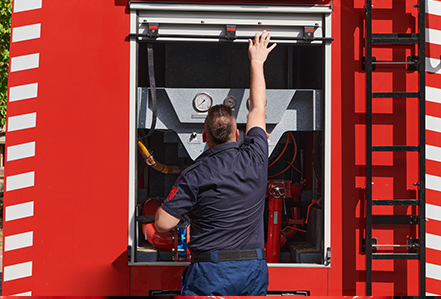
When a Baltimore-area building owner searches for kitchen fire suppression, they are choosing between a faceless national vendor and a local shop they can actually reach. Code One Fire Protection is the second: a Pikesville-based crew of 14 with 8 trucks on the road, a Maryland State Fire Marshal license, NICET-certified technicians, and decades of Mid-Atlantic experience through Main Stream Associates. You get the code knowledge of a large firm and the responsiveness of a company that works your neighborhood every day.
Kitchen suppression across the Baltimore metro
Commercial kitchens run the length of our service area — the restaurant rows of Fells Point and Canton, the food halls and hotels downtown, the diners and pizzerias of Towson, Catonsville and Glen Burnie, the banquet kitchens of Annapolis and the cafeterias of every school, hospital and senior-living community in between. Every one of them answers to a county fire marshal and a health department that both check the hood system.
We keep them on the six-month NFPA 96 and 17A schedule, upgrade pre-UL 300 systems before an inspector flags them, and coordinate the Class K extinguishers at the line. When a kitchen in Columbia or Bel Air needs to reopen fast after a discharge, one local team recharges the system and gets it back on the tag.
Serving businesses across Central Maryland
Frequently asked questions
How often does a kitchen hood suppression system need to be inspected?
Every six months. NFPA 96 and NFPA 17A require a semi-annual service that includes fusible link replacement, nozzle and cylinder checks, and a new tag. We keep you on that schedule so you never fall out of compliance.
What is a UL 300 upgrade and do I need one?
UL 300 is the current standard for wet-chemical kitchen suppression. Older dry-chemical systems do not meet it and are no longer code-compliant. If your system predates UL 300, most authorities and insurers now require an upgrade, which we handle.
Is hood cleaning the same as suppression service?
No, they are two different trades. We service the suppression system (the cylinders, nozzles, links and shutoffs). Hood and duct cleaning removes grease and is done by a cleaning company. We coordinate the two and tell you when your grease load is a problem.
My system discharged. What do I do before reopening?
The kitchen should not resume cooking under that hood until the system is recharged, the fusible links are replaced and it is re-tagged. Call 410-764-8550 and we will get you back open as fast as safely possible.
Do I still need a fire extinguisher if I have a hood system?
Yes. A Class K wet-chemical extinguisher is required within reach of the cooking line in addition to the hood system. We supply and service both so the whole line is covered.
Can you install a system for a new kitchen build-out?
We can. We design and install UL 300 systems for new hoods, permit them with your local authority, and integrate the gas and electric shutoffs. Send the quote form or call to get on the schedule.
Get a quote or schedule service
Tell us what you need and we will come back with a straight answer and a real number, usually the same business day. Prefer the phone? Call 410-764-8550. Emergencies are answered around the clock.
- Licensed Maryland contractor (#MSC-635)
- 24/7 emergency response
- Free, no-pressure quotes
Ready to get started?
Call for a quote, schedule an inspection, or get a repair handled today.